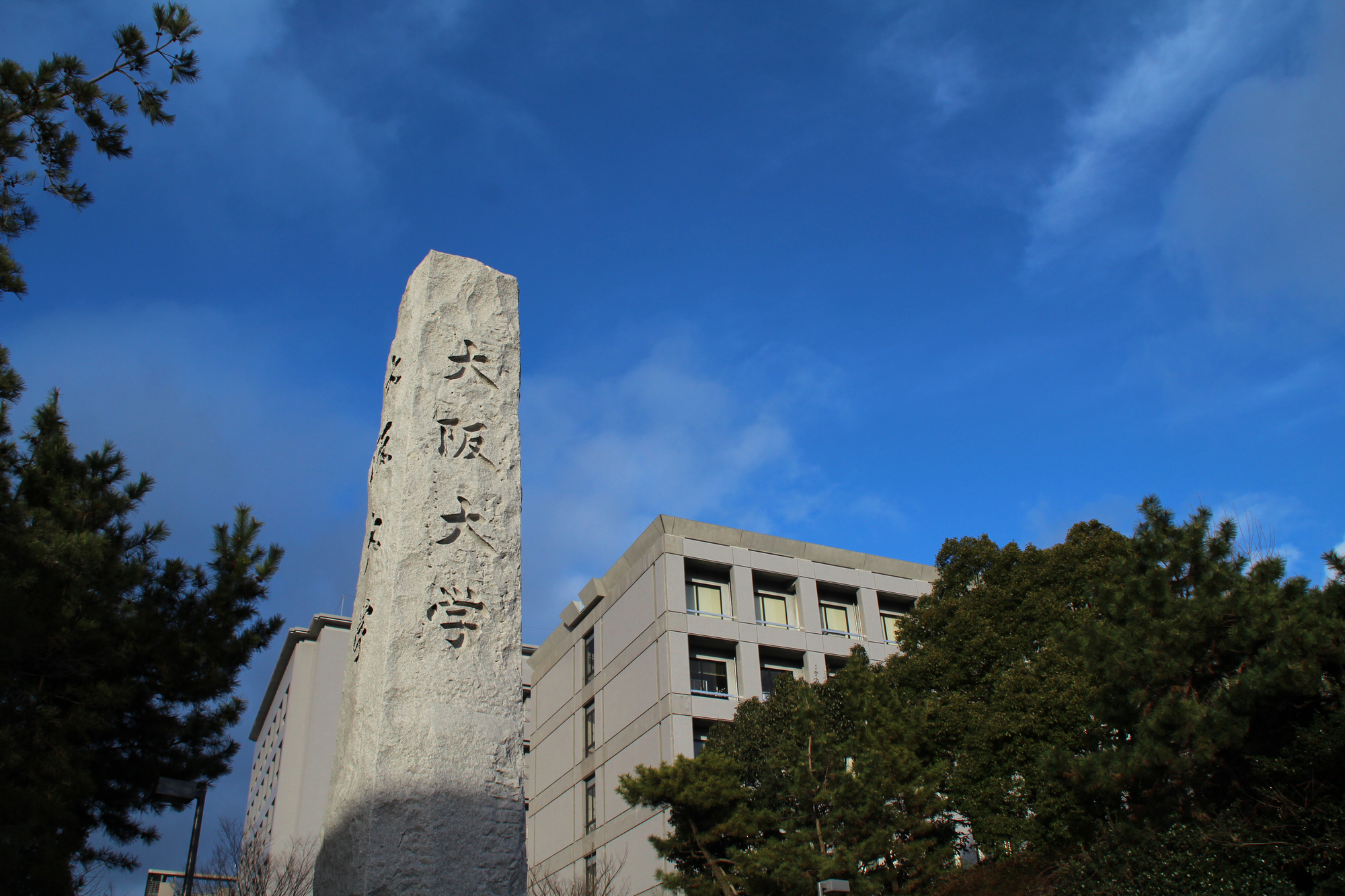
The smartphones and computers we use every day have historically relied on tiny components called "transistors" to support their performance. Computers have evolved by making these transistors as small as possible and packing as many of them as possible into a single device. However, considering that a single atom is approximately 0.1 nanometers in size, it's impossible to make them infinitely small. As the limits of semiconductor miniaturization are becoming apparent, it's becoming increasingly difficult to expect the same level of performance improvements from computers as before.
This is where "quantum computers" are attracting attention. A quantum is the smallest unit that makes up matter and energy, and our bodies and the world are all made up of quanta. In this extremely small world, a mysterious law called quantum mechanics is at work. For example, when you flip a coin, the result is either "heads or tails," but in the quantum world, there is a superposition state where something is "both heads and tails." Furthermore, there is a phenomenon called "quantum entanglement" in which two quanta behave simultaneously as if they were twins, even when they are far apart. The 2022 Nobel Prize in Physics was awarded for research that experimentally confirmed the existence of this phenomenon, which became a major topic of discussion.
A new type of computer that uses these quantum properties to perform calculations is a quantum computer. This idea was conceived in 1981 when physicist Richard Feynman said, "To accurately simulate nature, we need a computer that follows quantum mechanics." However, the challenge was that quanta are very vulnerable to external heat and noise, making it difficult to preserve information.
Amidst this trend, Google announced a breakthrough in 2019 called "quantum supremacy," demonstrating a speed far exceeding existing supercomputers in certain calculations. This spurred a global development race. In Japan, RIKEN and Fujitsu unveiled a domestically produced quantum computer in 2023, and Osaka University also began operating its own quantum computer. Then, at the 2025 Osaka-Kansai World Expo, as shown in the photo, a quantum computer, primarily developed by Osaka University and with all major components domestically produced, was publicly unveiled.
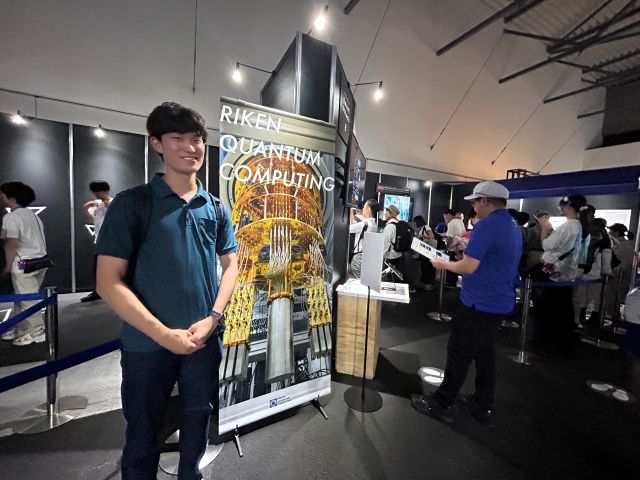
Quantum technology is gradually becoming a part of our lives, but what exactly will quantum computers be useful for?
A prime example is the development of new drugs. Simulating how candidate drug molecules bind to proteins in the body requires extremely complex calculations, but quantum computers are expected to be able to do this efficiently. Another application is traffic congestion prediction. Quantum computers excel at simultaneously searching for the optimal solution from various candidates, and are expected to be able to quickly determine the optimal route while taking traffic congestion into account.
Of course, quantum computers still face significant challenges, particularly the difficulty of error correction. Quantum information is fragile, and the technology to protect it while maintaining stable computations is still under development. This is one reason why it's said that practical applications may take several decades, but research is steadily progressing, and expectations are gradually rising.
Message to high school students
During high school, I participated in the Japan Science and Technology Agency's "Global Science Campus" program, where I gained experience in research presentations and overseas training, which led me to pursue a career in research. I believe that the attitude of continuously challenging oneself in what one loves is the driving force that opens up the future. Together with all of you, I hope to develop Japan's quantum technology and realize a more prosperous society.
Osaka University, Graduate School of Engineering Science, 1st year doctoral course
Yuuki Mori (graduate of Okayama Daianji Secondary School)
Born in 2000 in Okayama Prefecture. After graduating from Okayama Daianji Secondary School in 2019, he entered the Department of Electronic Physics and Engineering Science, Faculty of Engineering Science, Osaka University, and advanced to the Graduate School of Engineering Science at the same university in 2023, where he remains to this day. His specialization is quantum information science and quantum computing.