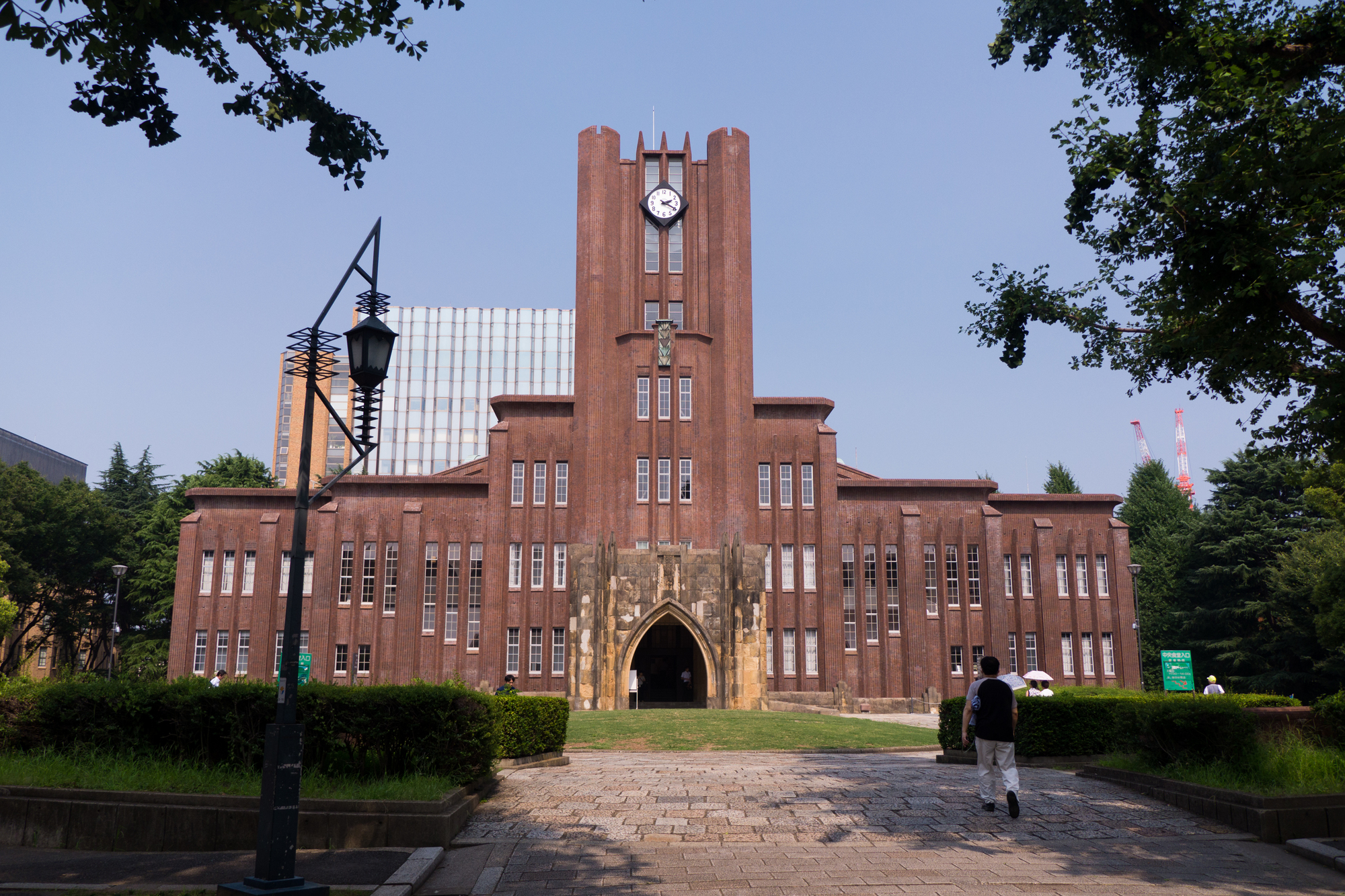
The 11th PDA National High School Impromptu English Debate Tournament was held over two days, December 23rd and 24th, at the Institute of Industrial Science (Convention Hall, etc.) on the University of Tokyo's Komaba Campus, with a record-breaking 100 schools and approximately 300 students participating from across the country (including some online participants). Seikogakuin High School from Kanagawa Prefecture won for the second time, with Fujishima High School from Fukui Prefecture coming in second. The tournament was organized by the Parliamentary Debate Human Resource Development Association (PDA) (Representative: Tomohiro Nakagawa, Associate Professor, Osaka Metropolitan University), co-sponsored by the Institute of Industrial Science, University of Tokyo and Osaka Metropolitan University, and supported by the Ministry of Education, Culture, Sports, Science and Technology and the National Association of High School Principals, among others.
 The winning team was Seikogakuin High School from Kanagawa Prefecture.
Tournament Overview and Results
The tournament follows the rules and manuals set by the PDA, with school representative teams of three players each competing in a tournament format. The first day consists of preliminary rounds up to the fourth round, and the second day features the quarterfinals, semifinals, and final. Due to the record number of participating schools in this tournament, a random match was also held between the teams ranked 9th to 16th in the preliminary rounds. Online play was also used due to venue and school availability.
The following three schools received the "Outstanding Lesson Implementation Award" at the 11th National Convention.
Tokushima Prefectural Jonouchi Secondary School
Yamagata Prefectural Higashi Sakura Gakkan High School
Chiba Prefectural Funabashi High School
*One team per school. The following students are limited to one per team: Students who have lived for two years or more in a country where English is the first or second language (preschool years are not considered); students who have attended an international school or equivalent institution for two years or more; and students who regularly use English at home or school.
 The tournament results (top 16 schools) are as shown in the table.
 The runner-up was Fukui Prefectural Fujishima High School.
Tournament format, how the competition is conducted
Each round is completed in 50 minutes. The topic and the roles of affirmative and negative are presented first, and each team has 15 minutes to strategize about their argument and anticipate their opponent's questions. Each team is required to have two supporting points for their argument. Furthermore, each of the three members of a team will take on one of three roles, based on the following combination table.
The match time is 20 minutes. The three members of each team will move to the podium in order and appeal to the judges, who are acting as the general audience. The debate will proceed as follows:
First, the affirmative side's Prime Minister (PM) defines the topic and lists two affirmative points, explaining the first one. Next, the opposition representative (LO) confirms the negative side's strategy, develops counterarguments to affirmative point 1, confirms negative points 1 and 2, and then provides a detailed explanation of point 1. Following this, the second member of the affirmative team, the MG, counters negative point 1, attempts to revise it, and provides a detailed explanation of affirmative point 2. Then, the negative side member (MO) responds by developing counterarguments to both affirmative points 1 and 2, revising negative point 1, and explaining negative point 2. Subsequently, the negative team's leader (LOR) confirms the negative side's strategy, summarizes the debate so far, and states why the negative side's arguments are superior, concluding the discussion. Finally, the affirmative team's leader (PMR) counters negative point 2, summarizes the discussion, highlights the superiority of their own arguments, and concludes the discussion.
The entire process takes only 20 minutes. Each player has about 2-3 minutes, and even then, they have to limit their response time to 15 seconds. However, they can also expect questions and comments from the opposing team called Points of Information (POIs) (which they can refuse), so their time is even shorter, and they don't even have time to glance at their pre-prepared notes.
The last 15 minutes will be dedicated to the judges' decisions and comments.
The evaluation is based on two aspects: content, such as "reasons for the argument," "specific examples," "relevance to the topic," and "speaker's role and strategy," and expression, such as "attitude and speaking posture," "eye contact and gestures," "clarity," and "time management." Each item is scored accordingly.
The reason the match time is 50 minutes
Impromptu debates are widely used in educational settings around the world, and their forms and organizational structures vary considerably.
In this context, one of the key features of PDA is that the system was designed from the outset with use in public education in mind. Since it can be completed in 50 minutes, it is easy to incorporate into English classes and other subjects. Furthermore, from the 2022 academic year, it has been adapted to be used in debate activities within the new high school English subjects, "Logic and Expression I, II, and III."
This approach proved successful, and in just ten years, PDA's impromptu debate has accumulated practical examples in over 1,000 schools across Japan, including junior high schools.
Furthermore, in line with these principles, exchange tournaments such as the Kanagawa Prefecture Public High School Impromptu English Debate Exchange Tournament and the Tokyo Metropolitan Area Impromptu English Debate Tournament are also held in addition to the national tournament.
[Glossary] What are PDA and impromptu English debate?
Named after the format of the British Parliament, this type of debate is similar to educational debates in that participants are divided into pro and con sides and engage in a debate on a single topic. However, it differs in that the topic and positions are decided immediately before the competition, and unlike typical debates where the goal is to defeat the opponent, it aims to help participants re-examine their own thinking and make better decisions. Therefore, it is judged not only on the content of the argument but also on the method of communication and argumentation.
The organizing body, the Parliamentary Debate Human Resource Development Association (PDA), was established in 2014 with the cooperation of organizations such as the Japan English-speaking Association, with the aim of creating a society where parliamentary debate is accepted as a learning method, just like reading, writing, and arithmetic. Its purpose is to cultivate multiple skills such as the ability to communicate in English, logical thinking, broad knowledge, presentation skills, and communication skills through parliamentary debate, and to contribute to the development of human resources who can contribute to a global society.
What kind of people are the judges?
Many of the judges are certified "certified educational judges" recognized by the PDA. Most are selected from teachers and working professionals who lead and instruct each team. At the beginning of the second day of the competition, a "judgment break" is held where participating students evaluate the judges. In this, students evaluate the judges on a five-point scale for both content and expression, from two perspectives: "how much did I agree with the judge's comments?" and "how much did it increase my motivation to learn next time?" The 40 students with the highest average scores are announced, and those selected from among them will serve as judges in the final tournament.
What kinds of topics are there for the debate?
The topics chosen are mainly current events, contemporary social issues, and themes familiar to high school students' daily lives. English ability is important, but being sensitive to society, social issues, and problems in everyday school life, and thinking about solutions to these issues, will also influence the outcome.